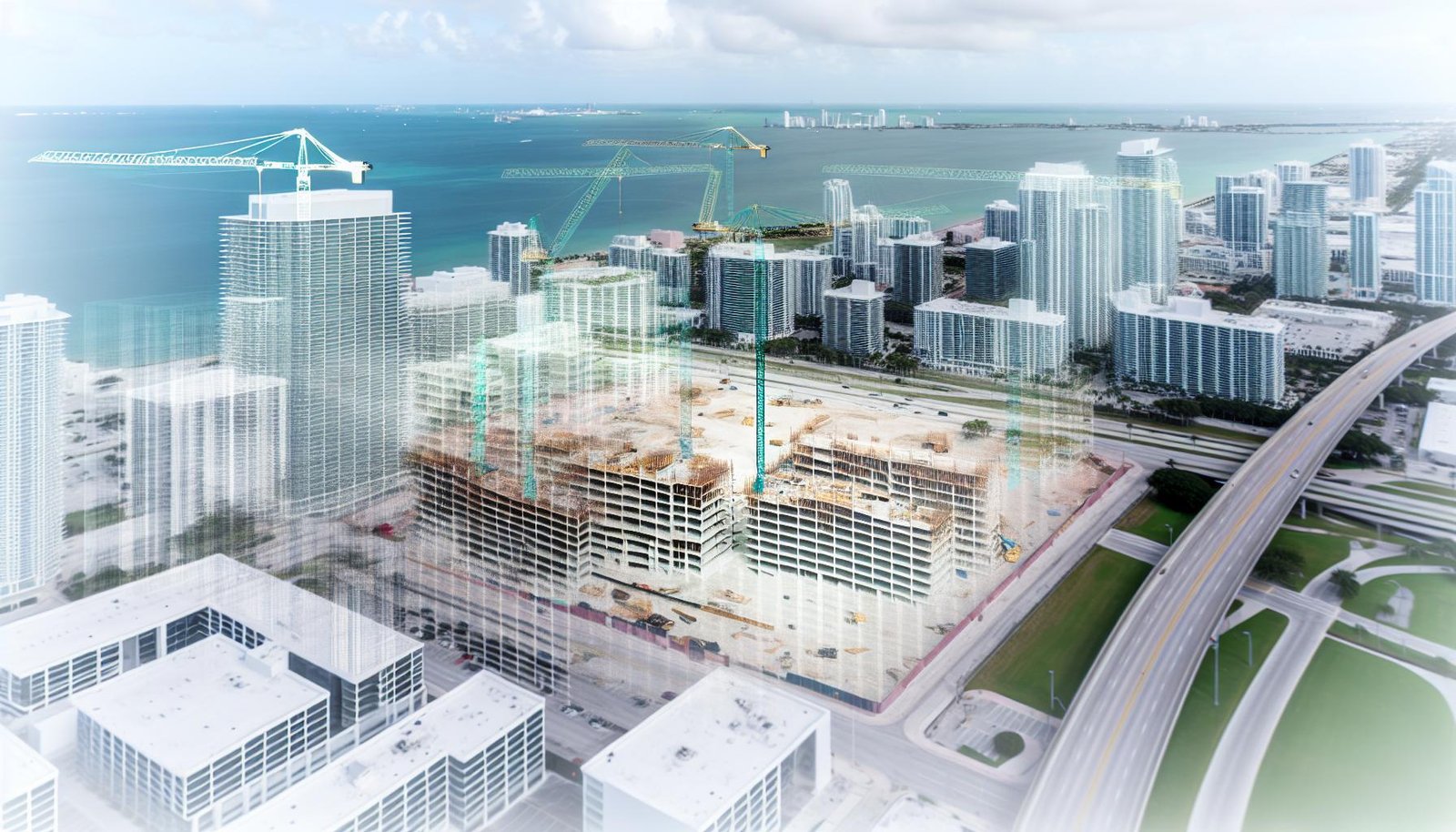
Miami continues to be a global magnet for capital, talent and innovation. For investors, real estate developers and the media covering urban transformation, understanding the dynamics of real estate development Miami is essential to identify opportunities and manage risk. This article ofrece (provides) a comprehensive, actionable overview of the Miami market in 2025: trends, financing, permitting, neighborhoods, project typologies and practical steps on how to start real estate development in Miami.
Why Miami? Macro drivers shaping Miami real estate development
Miami’s appeal rests on a set of durable macro drivers: population growth, international capital flows, a favorable tax environment, climate-forward innovation, and strategic infrastructure investments. These forces have helped create a robust pipeline of Miami development projects, from high-end waterfront towers to mixed-use neighborhoods that combine housing, retail and office space.
- Population and demand: Domestic migration and international buyers continue to increase demand for both luxury and attainable housing.
- Capital markets: Global investors and institutional capital view Miami as a core market for diversification.
- Urbanization trends: Demand for walkable, amenity-rich living supports urban development Miami initiatives.
- Climate adaptation: Developers are prioritizing resilience and sustainable design in response to sea-level rise and extreme weather.
Key market segments: residential, commercial and mixed-use
Understanding the distinctions between segments helps align investment strategy with market demand:
Residential real estate development Miami
Residential real estate development Miami ranges from luxury towers on the waterfront to workforce housing and adaptive reuse projects in urban corridors. Developers must balance density, unit mix and amenity packages to address evolving buyer and renter preferences, including co-living, flexible layouts and integrated health and wellness services.
Commercial real estate development Miami
Commercial real estate development Miami includes office, retail, hospitality and logistics. Post-pandemic hybrid work patterns are reshaping office demand, while experiential retail and neighborhood-serving services remain critical for mixed-use success.
Miami mixed-use development projects
Mixed-use is a dominant typology in Miami. Miami mixed-use development projects create synergies between residential, commercial and public spaces, increasing value capture for developers and improved live-work-play dynamics for residents.
Top neighborhoods and opportunity zones
Site selection remains one of the most important determinants of project success. For investors asking best neighborhoods for real estate development in Miami, several corridors stand out:
- Brickell: High-density finance and luxury residential core—strong for high-rise condominium and office conversions.
- Wynwood / Design District: Creative economy hub—ideal for mixed-use, cultural anchors and experiential retail.
- Edgewater / Upper East Side: Waterfront opportunities with growing residential demand for luxury and resilient design.
- Little Havana / Overtown: Emerging neighborhoods with redevelopment potential and workforce housing needs.
- Downtown / Park West: Transit-oriented sites suitable for high-density residential and institutional projects.
When evaluating locations, investors should analyze zoning, transit connectivity, flood risk, and neighborhood amenities. These criteria are central to how to evaluate real estate development opportunities in Miami.
Financing structures and options
Access to capital is a decisive factor. Investors and developers exploring Miami real estate development financing options should be aware of a spectrum of possibilities:
- Construction loans: Traditional senior loans from banks and regional lenders for the build phase.
- Mezzanine debt and preferred equity: Bridge the gap between senior debt and sponsor equity, often used to optimize capital stacks.
- Institutional equity: Pension funds, REITs and private equity firms providing large-scale capital for core and core-plus projects.
- Joint ventures: Strategic partnerships that combine local development expertise with deep-pocketed investors.
- Tax-credit and incentive programs: Federal, state and municipal incentives—including affordable housing tax credits and opportunity zone benefits—can materially improve project returns.
Structuring the capital stack requires balancing cost of capital, governance, tax considerations and exit strategy. Market conditions in 2025 demand prudent leverage and contingency planning given evolving interest rate dynamics.
Zoning, permitting and regulatory landscape
Navigating zoning and permitting for real estate development in Miami is complex and varies by jurisdiction—City of Miami, Miami-Dade County and specific municipal overlays. Key compliance areas include:
- Zoning designations: Determine allowable uses, density, FAR (floor area ratio) and height limits.
- Site plan reviews and public hearings: Particularly relevant for large-scale or contested projects.
- Environmental permitting: Wetlands, coastal construction, and FEMA floodplain considerations.
- Building codes and resilience standards: Miami-Dade has progressively tightened codes to improve storm resilience and wind performance.
- Infrastructure and impact fees: Mitigation requirements for traffic, parks and utilities may affect project feasibility.
Early engagement with planners, community stakeholders and city agencies reduces delays and mitigates risk. Retaining local counsel and permit expeditors is standard practice for successful Miami property development.
Sustainability and resilience as competitive advantages
sustainable real estate development in Miami is no longer optional. Climate resilience and energy performance are market differentiators and often prerequisites for institutional capital. Key measures include:
- Elevated design and flood-proofing: Raising ground-floor elevation, flood barriers and wet/dry floodproofing systems.
- Passive design and energy efficiency: High-performance envelopes, LED lighting, and smart building management systems.
- Water management and landscaping: Stormwater retention, native landscaping and green roofs to reduce urban heat and runoff.
- Renewable energy and electrification: Solar arrays, battery storage and electrification of building systems.
- Certifications: LEED, WELL and other third-party standards that enhance marketability and tenant demand.
Investing in resilience can reduce insurance costs, lower long-term operating expenses and increase asset liquidity—critical considerations for those seeking to invest in real estate development in Miami.
Miami waterfront real estate development projects: special considerations
Miami waterfront real estate development projects present both premium upside and heightened regulatory scrutiny. Waterfront sites command price premiums but face greater constraints:
- Coastal construction regulations: State and local permitting for seawalls, docks and coastal features.
- Sea-level rise planning: Long-term modeling and insurance exposure need to be factored into underwriting.
- Public access and easements: Projects must often provide or preserve shoreline access, promenades and environmental buffers.
Successful waterfront projects marry high-quality design with resilient infrastructure and clear public value, increasing support from regulators and the community.
How to start real estate development in Miami: step-by-step
For sponsors asking how to start real estate development in Miami, the path from idea to delivery follows repeatable stages:
- Market and site analysis: Demand studies, comparable transactions, rent/price projections and neighborhood suitability.
- Feasibility and pro forma: Detailed financial modeling including development budget, operating projections and sensitivity analysis.
- Entitlements and approvals: Zoning confirmation, community engagement and permit strategy.
- Capital formation: Secure equity partners, construction financing and commitments for contingency reserves.
- Design and procurement: Engage architects, engineers and general contractors with relevant local experience.
- Construction management: Strong oversight on schedule, cost controls and quality assurance.
- Leasing / Sales and stabilization: Pre-sales or lease-up strategy to reach stabilization and execute exit options.
Each stage carries risk that must be actively managed—market shifts, permitting delays, cost escalation and supply chain disruptions remain key concerns in 2025.
Evaluating development opportunities
To how to evaluate real estate development opportunities in Miami effectively, investors should use a disciplined checklist:
- Location fundamentals: Transit, employment centers, schools and neighborhood trajectory.
- Regulatory feasibility: Zoning, entitlements and potential for variances.
- Financial return analysis: IRR, equity multiple, sensitivity to absorption and pricing.
- Exit strategy: Sale to institutional buyer, stabilization as long-term hold, or conversion to condo or rental.
- Operational complexity: Management needs, service levels and OPEX assumptions.
- Environmental and resilience risks: Flood maps, insurance availability and mitigation costs.
Who are the top players and partners?
For those researching Miami real estate development companies and top real estate development firms in Miami, the ecosystem includes national builders, local sponsors and specialized boutique teams. Strategic partnerships that combine local knowledge with institutional capital tend to perform best. As market competition intensifies, differentiation is increasingly driven by design excellence, execution capability and reputation for navigating the local regulatory environment.
Commercial strategies: office, retail and hospitality
Commercial real estate development Miami strategies must reflect changing occupier demands. Office projects that integrate flexibility, amenity-rich common areas and proximity to transit maintain higher occupancy and rental resilience. Retail is strongest when curated to serve residents and visitors through experiential concepts, food halls and service-oriented businesses. Hospitality projects benefit from Miami’s tourism draw, especially when aligned with cultural programming and waterfront access.
Case studies and lessons from recent Miami development projects
Examining successful case studies offers practical lessons. Typical patterns among high-performing projects include:
- Early community engagement: Proactive outreach reduces opposition and speeds approvals.
- Value engineering: Constant focus on cost control without compromising long-term durability.
- Resilience planning: Elevated podiums, flood mitigation and redundancies in critical systems.
- Flexible design: Adaptive floor plates that allow conversion between uses over time.
PK Development Group has leveraged many of these principles in its Miami portfolio, aligning project design with market demand and resilient construction practices to deliver assets that attract institutional interest and long-term tenants. Local track record and demonstrated execution capability are decisive when selecting development partners.
Risk management and mitigation
Managing risk in Miami requires attention to operational, financial and environmental exposures. Practical mitigation approaches include:
- Conservative underwriting: Stress-test pro formas against rent declines, cost overruns and longer lease-up.
- Insurance strategies: Specialized coastal coverage and captive insurance structures where feasible.
- Procurement diversification: Multiple suppliers and prefabrication to reduce schedule risk.
- Regulatory contingency: Maintain alternate design solutions for permitting flexibility.
How investors can participate
For capital allocators wondering how to invest in real estate development in Miami, entry points include joint ventures with local sponsors, investing in development funds focused on South Florida, or acquiring stabilized assets with value-add plans. Due diligence should emphasize sponsor track record, alignment of interest, and clear governance structures to protect investor capital.
Emerging trends to watch in 2025
As we move through 2025, several trends will shape the next generation of Miami development projects:
- Increased focus on resilience and insurance innovation: New financing and insurance products to address climate risk.
- Technology integration: Smart buildings, proptech platforms and digital tenant experiences.
- Transit-oriented development: Projects around planned transit expansions gaining investor interest.
- Adaptive reuse: Converting obsolete office or industrial buildings into residential or mixed-use developments.
- Community-centric projects: Developments that incorporate workforce housing and public amenities to secure approvals and long-term neighborhood value.
Practical checklist for developers and investors
Before committing to a project in Miami, use this concise checklist:
- Confirm zoning and entitlements early.
- Perform a detailed market absorption and pricing analysis.
- Structure a resilient capital stack with contingency reserves.
- Engage experienced local consultants for permitting and community relations.
- Incorporate sustainability and flood-resilience measures into core design.
- Model multiple exit scenarios and stress tests for downside protection.
Conclusion: positioning for durable value
Miami’s real estate marketplace offers compelling opportunities for those who carefully align site selection, capital strategy and resilient design. Whether your focus is commercial real estate development Miami, residential real estate development Miami or innovative Miami mixed-use development projects, success requires a disciplined approach to underwriting, strong local partnerships and an emphasis on sustainability.
For developers and investors, partnering with experienced teams—those knowledgeable about Miami real estate development companies and the unique regulatory environment—accelerates project delivery and reduces execution risk. As capital markets evolve in 2025, the ability to deliver high-quality, resilient projects will be the primary differentiator for long-term value creation.
Explore our Miami developments →
What aspects of Miami’s market or your investment objectives would you like to discuss further?