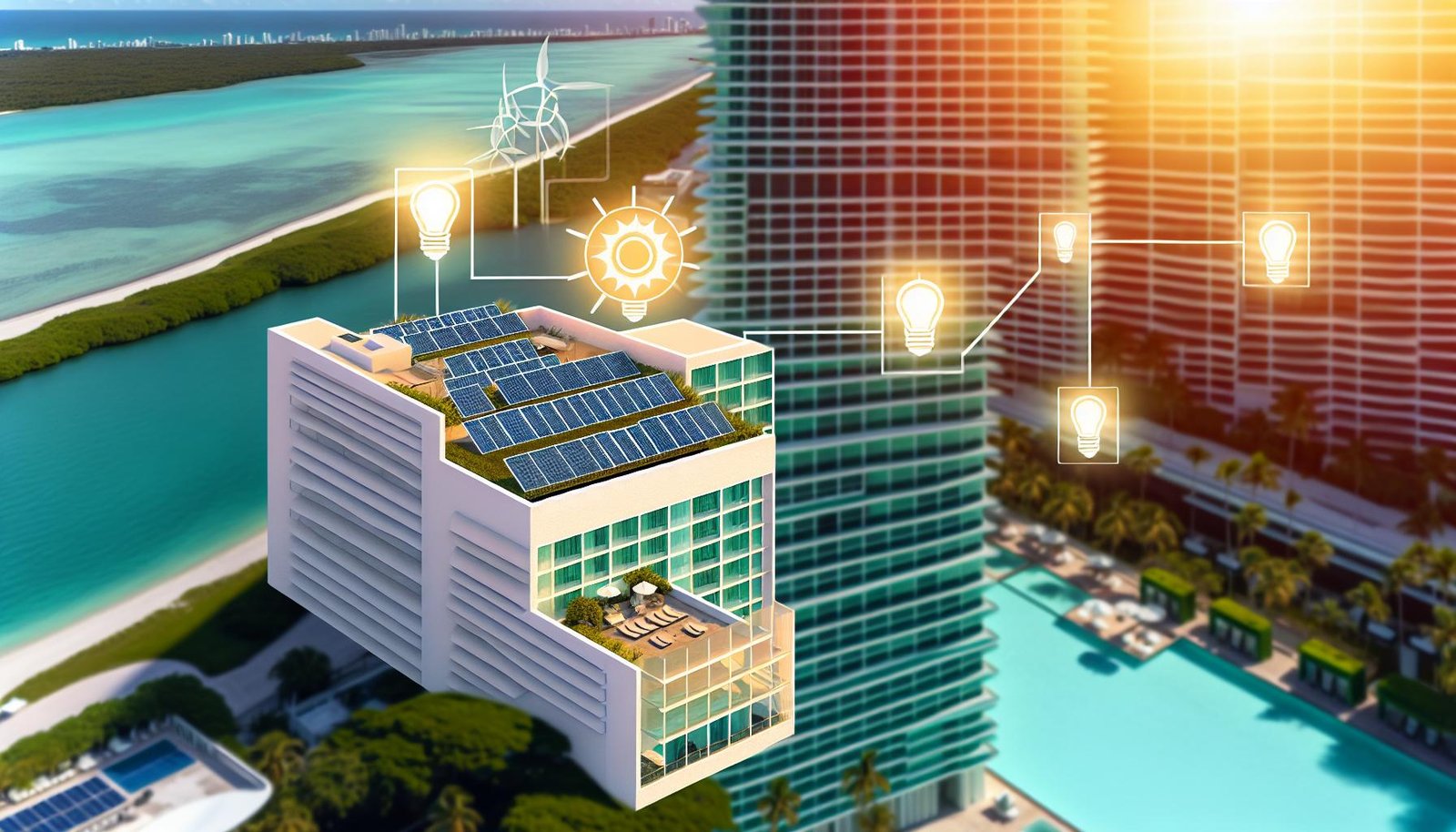
Miami’s built environment is at a turning point. For architects, developers, and ESG investors focused on durable value and reduced environmental impact, energy-efficient design Miami represents both a responsibility and an opportunity. This article provides a comprehensive, practical guide to the principles, standards, incentives, and implementation strategies that shape modern, high-performance projects in Miami’s unique climate and regulatory environment.
Why energy-efficient design Miami matters now
As climate risks and energy costs rise, the demand for green building Miami solutions grows. Energy-efficient buildings not only reduce operating expenses, they also attract tenants, improve asset valuation, and meet increasing ESG mandates from capital providers. For developers and architects, integrating sustainable design Miami practices early in the planning process is essential to delivering resilient, market-leading projects.
- Operational savings: Lower energy consumption reduces lifecycle costs and improves net operating income.
- Regulatory compliance: Meeting Miami waterfront building codes energy efficiency requirements and other local mandates avoids delays and added costs.
- Investor demand: ESG investors prioritize energy efficiency Miami real estate portfolios when evaluating risk-adjusted returns.
- Market differentiation: High-performance buildings Miami command higher rents and occupancy.
Key terms and frameworks to know
To plan and communicate effectively, projects should use industry-standard terminology: green architecture Miami principles, sustainable design Miami frameworks, and certifications such as LEED Miami or targets like net zero energy Miami. Understanding these frameworks helps teams align goals with measurable outcomes.
- Green building Miami: Holistic approaches to reduce environmental impacts across a building’s lifecycle.
- Sustainable design Miami: Design strategies addressing energy, water, materials, and occupant health.
- High-performance buildings Miami: Buildings optimized for energy, durability, indoor environmental quality, and resilience.
- Energy efficient buildings Miami: Buildings that minimize energy consumption through passive design, efficient systems, and smart controls.
Site and climate considerations unique to Miami
Miami’s tropical climate influences every aspect of energy-efficient design Miami. High humidity, intense solar radiation, and hurricane exposure require a customized approach:
- Orientation and shading: Reducing solar heat gain through building orientation, shading devices, and high-performance glazing lowers cooling loads.
- Natural ventilation vs. air-conditioning: Selective use of natural ventilation can be effective in transitional seasons but must be balanced with humidity control strategies.
- Durability and moisture management: Material selection and detailing must prevent mold and maintain long-term envelope performance.
- Storm resilience: Envelope systems and mechanical equipment must comply with Miami waterfront building codes energy efficiency requirements while resisting wind and flood risks.
Design strategies for energy-efficient buildings Miami
Architects and developers should integrate energy-efficiency strategies at concept and schematic design. Key tactics include passive design, envelope optimization, efficient systems, renewable integration, and smart controls.
Passive design and envelope optimization
Well-considered massing, high-performance insulation, reflective roofing, and shading minimize cooling demand. In Miami, this means specifying low-e glazing with appropriate solar heat gain coefficients and designing balconies, louvers, and overhangs to block high-angle sun.
Efficient HVAC and mechanical systems
Choosing right-sized, efficient HVAC systems, VRF systems, energy recovery ventilators (ERV), and digitally controlled systems reduces energy use while improving comfort. For multifamily and mixed-use projects, centralized plant efficiency and distribution losses must be carefully managed.
Lighting and controls
LED lighting, daylighting strategies, occupancy sensors, and integrated building automation systems optimize lighting energy use and occupant satisfaction. Controls also enable demand response and load shifting, which can generate income or savings under utility programs.
Renewables and net-zero pathways
On-site solar and battery storage are increasingly feasible. For projects targeting net zero energy Miami outcomes, a combination of energy reduction and on-site renewable production is required. Consider solar-ready roofs and structural allowances early in design.
Materials and construction: best practices
Selecting the right materials is critical. Prioritize durable, low-maintenance components that reduce lifecycle environmental impact and support long-term energy performance.
- Best energy-efficient materials for new Miami construction: Use high-performance glazing, insulated concrete forms (ICFs) in flood-resistant areas, reflective roofing membranes, and moisture-tolerant finishes.
- Thermal bridging control: Continuous insulation and thermal breaks reduce heat transfer and HVAC demand.
- Low-emissivity coatings and coatings: Reduce radiant heat gains on façade elements.
In summary, specifying the best energy-efficient materials for new Miami construction requires balancing performance, cost, durability, and constructability in a coastal environment.
Certification and standards: LEED, net-zero, and high-performance benchmarks
Certifications and benchmarks help quantify performance and communicate value to investors and tenants. Two common pathways in Miami are LEED certification and net-zero targets.
LEED Miami and the certification process
Understanding the LEED certification process in Miami for real estate developers is essential for projects seeking formal recognition. LEED reviews energy use intensity, water efficiency, materials, indoor environmental quality, and regional priorities. Early engagement with a LEED consultant can optimize point selection, documentation workflows, and construction-phase verification.
Net zero energy building design in Miami
Achieving net zero energy building design in Miami requires aggressive energy reductions and on-site renewables. Strategies include advanced envelope design, ultra-efficient HVAC, LED lighting, heat recovery, and solar photovoltaics sized to meet annual energy needs. For many projects, staged approaches—first targeting high-efficiency and then adding renewables—are the most practical.
High-performance building standards for Miami real estate
Adopting high-performance building standards for Miami real estate—such as energy modeling targets, commissioning, and post-occupancy measurement—ensures that promised efficiencies become realized savings.
Regulations, incentives, and economic considerations
Understanding both the regulatory landscape and the financial incentives is crucial for making the business case for energy-efficient investments.
Miami-specific codes and waterfront requirements
Developers must navigate local codes, including the Miami waterfront building codes energy efficiency requirements that address both resilience and energy performance. Code compliance baseline should be established early so that higher-performance strategies supplement rather than conflict with mandatory standards.
Incentives and rebates
Federal, state, and utility-level incentives can materially improve project economics. Research incentives and rebates for energy-efficient design in Miami—from solar incentives and tax credits to local grant programs—during early feasibility analysis to capture available funding streams.
Cost-benefit analysis
Performing a detailed cost-benefit analysis of energy-efficient design for Miami buildings is essential to secure financing and investor support. Evaluate first costs versus lifecycle savings, reduced maintenance, increased rents, and potential tax incentives. Use life-cycle cost analysis to show returns and payback periods under conservative energy price projections for 2025 and beyond.
Practical guide: how to implement energy-efficient design in Miami real estate projects
For architects, developers, and ESG investors asking how to implement energy-efficient design in Miami real estate projects, the following phased approach offers practical steps.
- Discovery & market analysis: Establish project goals, target certifications (LEED Miami, net zero), and investor requirements. Conduct a baseline energy model.
- Schematic design: Integrate passive strategies, orientation, envelope targets, and solar-ready geometry.
- Design development: Specify systems, materials (including best energy-efficient materials for new Miami construction), and refine energy models to meet benchmarks.
- Construction documents & procurement: Include performance specs, commissioning requirements, and procurement strategies for efficient equipment and renewables.
- Construction & commissioning: Conduct rigorous commissioning and testing to confirm systems operate as designed.
- Operations & measurement: Implement building management, continuous commissioning, and post-occupancy evaluation to sustain performance.
Following these steps aligns with Miami energy efficient design guidelines for developers and reduces the risk of performance gaps between design intent and realized operation.
Solar-ready design and integration
Considering photovoltaics early avoids costly rework later. The phrase solar-ready design considerations for Miami developments captures a set of essential design moves:
- Allocate roof area and structural capacity for PV arrays and potential battery storage.
- Coordinate electrical infrastructure and conduit pathways for easy tie-in.
- Design roof access and safety features for maintenance in a coastal environment.
- Consider shading from adjacent structures and roof equipment when sizing arrays.
In Miami’s high-solar environment, solar-ready decisions often yield attractive paybacks when considered at project inception.
Managing resilience and energy efficiency together
Resilience and energy efficiency are complementary. In Miami, project teams should integrate flood- and wind-resilience measures with energy strategies to create truly durable assets. Battery storage and microgrid-ready designs support occupant needs during extreme weather and provide utility benefit during peak pricing events.
Financing and investor communication
ESG investors and lenders increasingly require transparent metrics. Include energy modeling, projected operating costs, anticipated incentives, and certification roadmaps in investment memoranda. Demonstrating compliance with energy efficiency Miami real estate expectations strengthens financing outcomes and reduces perceived risk.
Case examples and illustrative outcomes
While project specifics vary, lessons from high-performance projects in Miami consistently show:
- Energy reductions of 30–60% compared to code-minimum buildings through combined envelope improvements and efficient systems.
- Faster lease-up and higher rents for buildings marketed as green building Miami or achieving LEED Miami certification.
- Improved tenant satisfaction and lower turnover in buildings that emphasize indoor environmental quality and robust controls.
These outcomes support the financial case in a cost-benefit analysis of energy-efficient design for Miami buildings and help explain why more developers adopt aggressive efficiency strategies.
Operational strategies to sustain performance
Design alone is not enough. Sustained performance requires operations that align with original design intent: commissioning, training building operators, continuous monitoring, and an occupancy feedback loop that identifies optimization opportunities.
Post-occupancy evaluation and regular energy audits ensure the building continues to meet efficiency targets and provides data to refine future projects.
Common pitfalls and how to avoid them
- Late renewable planning: Failing to design solar-ready roofs leads to expensive retrofits. Address solar-ready design considerations for Miami developments at concept stage.
- Underestimating humidity control: Tropical climates need systems sized to manage latent loads, not just sensible cooling.
- Ignoring commissioning: Skipping commissioning increases risk of performance gaps between modeled and actual energy use.
- Overlooking incentives: Not pursuing incentives and rebates for energy-efficient design in Miami can miss significant value.
Checklist for developers and architects
Use this practical checklist to align teams and investors around energy performance:
- Define energy targets and certification goals (LEED Miami, net zero energy Miami, or local high-performance standards).
- Complete early energy modeling and daylighting analysis.
- Specify best energy-efficient materials for new Miami construction and detail moisture and thermal control strategies.
- Design for solar readiness and battery integration.
- Engage a commissioning authority and plan for post-occupancy performance measurement.
- Document incentives and incorporate them into the financial model.
The role of multidisciplinary collaboration
Delivering energy-efficient projects in Miami requires close collaboration among architects, MEP engineers, landscape architects, cost estimators, and sustainability consultants. Teams should use iterative modeling and integrated design workshops to test trade-offs and optimize outcomes. Collaboration also helps align projects with Miami energy efficient design guidelines for developers and local code requirements.
Conclusion: a strategic imperative for Miami real estate
Energy-efficient design Miami is not simply an add-on; it is a strategic imperative that drives asset value, meets investor expectations, and ensures long-term resilience in a coastal and tropical environment. By combining thoughtful passive design, high-performance materials, efficient systems, and renewable-ready strategies, architects and developers can create buildings that are both sustainable and profitable.
To move from concept to measurable outcomes, teams must address both design and operational factors while leveraging available incentives and adhering to Miami-specific building codes and standards.
Learn how we build energy-efficient projects
What energy-efficiency strategies would most impact your next Miami project, and how can we help you prioritize them?