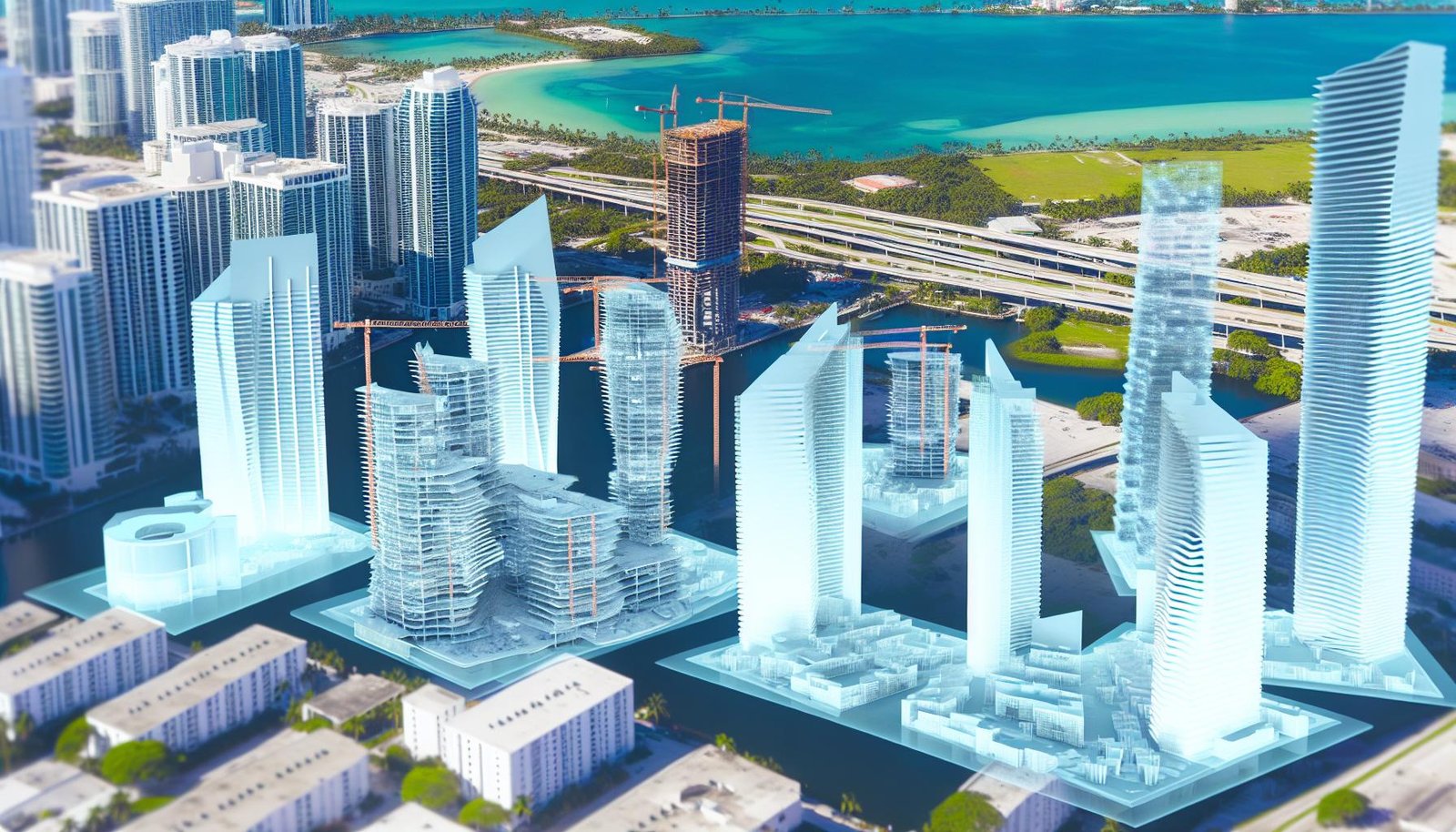
The skyline of Miami is undergoing a profound transformation driven by bold engineering, strategic urban planning, and a new generation of development philosophies. From high-rise towers in Brickell to mixed-use conversion projects in Wynwood, modern construction projects Miami are rewriting how developers, architects, and communities understand urban growth. This article examines the engineering capacity behind these advances, the most impactful urban transformation projects, and practical guidance for stakeholders considering investment or partnership in Miami real estate development.
The engineering capacity powering Miami construction
Delivering complex Miami construction requires a combination of advanced engineering, rigorous project management, and specialized local knowledge. Firms working on Miami building projects must plan for foundation challenges, hurricane loads, floodproofing, and regulatory requirements unique to Miami-Dade County. These technical constraints have catalyzed innovation. Today, engineering teams incorporate high-performance concrete mixes, deep pile systems, and advanced waterproofing membranes to protect assets from rising sea levels and storm surge.
Large-scale projects in Miami now routinely integrate structural health monitoring sensors, post-tensioned concrete slabs, and prefabricated building components. The use of modular assemblies and off-site fabrication reduces schedule risk and improves quality control for everything from high-rise cores to residential podiums. As a result, construction Miami projects are increasingly predictable in schedule and budget, supporting faster returns for investors and enabling more ambitious architectural visions.
Urban transformation: beyond individual buildings
Transformative construction is not limited to single towers. The best Miami real estate development initiatives treat neighborhoods as systems. Mixed-use development Miami projects are reshaping transit corridors, reviving underutilized parcels, and introducing resilient public spaces that address climate risk. Miami redevelopment and urban renewal projects focus on reconnecting neighborhoods to waterfronts, improving walkability, and incentivizing ground-floor commercial activity to sustain vibrant street life.
Wynwood development is a clear example of urban transformation achieved through creative redevelopment and adaptive reuse. Former industrial warehouses have been converted into cultural venues, galleries, and commercial real estate that anchor neighborhood renewal. Similarly, Downtown Miami construction strategies are emphasizing transit-oriented development and higher density while balancing historic preservation and public realm improvements.
Neighborhood highlights: Brickell, Downtown, Wynwood, Miami Beach, and beyond
Each Miami neighborhood presents distinct opportunities and constraints for developers and architects. Understanding local dynamics is essential when planning construction projects Miami across the metro region.
- Brickell construction : Brickell remains Miami’s financial core and a hotspot for high-rise residential and commercial towers. Developers targeting this market often pursue luxury Miami condo development projects and mixed-use projects that pair office, retail, and hospitality components. Structural engineering must accommodate high wind loads and transfer structures that create column-free floorplates sought by premium office tenants.
- Downtown Miami construction : Downtown is evolving into a 24/7 urban center. Miami building projects here emphasize connectivity to public transit, adaptive reuse of older office towers, and integrating cultural anchors. High-value commercial real estate development in Miami’s downtown leverages shared amenities and smart building infrastructure to attract institutional tenants.
- Wynwood development : Wynwood’s transformation is a model of creative placemaking. Developers and designers collaborate with cultural stakeholders to balance commercial objectives with artistic character. This approach has catalyzed smaller-scale, high-impact projects that foster community identity while producing strong returns.
- Miami Beach construction projects : Coastal engineering and historic preservation shape Miami Beach construction. Elevated platforms, dune restoration partnerships, and flood-resilient design are becoming standard components for new builds and major renovations in this high-profile beachfront market.
- Miami-Dade construction : At the county scale, Miami-Dade construction projects must comply with regionwide resilience plans and permitting frameworks, requiring coordination among engineers, environmental consultants, and municipal bodies.
Sustainability and resilient design in Miami real estate development
Given Miami’s exposure to sea level rise and extreme weather, sustainable construction projects in Miami are no longer optional. They are a market differentiator. Developers incorporate green roofs, stormwater retention systems, and elevated-grade entries to mitigate flood risk. Energy efficiency is achieved with envelope improvements, high-efficiency HVAC systems, and renewable energy integration. These measures reduce operating costs and enhance asset value.
Resilience strategies also extend to community benefits: elevated parks, wetland restoration, and permeable surface installations help manage stormwater while improving urban livability. For commercial real estate development in Miami, these investments attract tenants seeking continuity of operations and corporate social responsibility alignment.
Mixed-use development Miami: blending program for successful urban ecosystems
Mixed-use development Miami projects are driving longer dwell times and higher retail capture by combining residential, office, hospitality, and public uses. Successful mixed-use developments balance programmatic density with accessible public spaces, which is vital in high-demand markets like Brickell and Downtown Miami. From a developer perspective, diversifying income streams through mixed-use schemes mitigates market cycles and improves portfolio stability.
Architects and engineers collaborate early in these projects to optimize vertical stacking, separate service cores where necessary, and maximize structural efficiency. This integrated approach reduces conflict during construction and accelerates delivery of complex programs.
How to start a construction project in Miami: practical steps
For developers and architects wondering how to start a construction project in Miami, the process generally follows these core steps:
- Site selection and due diligence: Evaluate zoning, flood zones, existing utilities, and neighborhood plans. Engage geotechnical engineers early for foundation feasibility, especially in waterfront parcels.
- Programming and feasibility: Define the project program—commercial, residential, mixed-use—and run pro forma analyses to estimate the cost to develop real estate in Miami and projected returns.
- Entitlements and permits: Obtain the necessary approvals and permits for construction projects Miami requires. This includes zoning variances, environmental clearances, and building permits coordinated with Miami-Dade County.
- Design and engineering: Move through schematic design and design development with emphasis on structural, MEP, and site civil engineering to address stormwater and resilience measures.
- Preconstruction planning: Select a Miami construction company and negotiate contracts, schedules, and procurement strategies. Value engineering at this stage refines the cost to develop real estate in Miami.
- Construction and commissioning: Implement site controls, quality assurance, and commissioning to ensure systems perform as intended. For larger developments, phased delivery can enable earlier occupancy and revenue generation.
Throughout this lifecycle, stakeholder coordination among developers, architects, lenders, and municipal agencies is essential. Clear communication and experienced local partners streamline the path from concept to occupancy.
Permits, compliance, and local regulations
Understanding permits for construction projects in Miami is one of the principal hurdles for new entrants. Permitting timelines vary depending on project scale and complexity. Miami-Dade County enforces strict building codes for wind, flood, and structural performance. Projects along coastlines or in special flood hazard areas may require additional reviews for environmental impact and mitigation. Early engagement with permitting authorities and hiring consultants who specialize in local compliance reduces the risk of costly redesigns.
Additionally, projects that involve public right-of-way modifications, street-level activation, or waterfront access often require coordination across multiple municipal departments. For developers, investing in pre-application meetings and public outreach can significantly shorten approval cycles and foster community support for Miami redevelopment and urban renewal projects.
Cost drivers and financing strategies
When estimating the cost to develop real estate in Miami, stakeholders must account for land value, foundation and site remediation costs, advanced structural systems for wind and flood resilience, and higher insurance premiums in coastal zones. Labor market constraints and supply chain dynamics also influence final budgets for Miami construction.
Financing strategies include traditional construction loans, joint ventures with equity partners, and structured pre-sales for residential units in condo developments. For commercial real estate development in Miami, developers can pursue long-term leases with creditworthy tenants or include partially pre-leased floors to secure financing. Public-private partnerships are another route for large-scale Miami redevelopment and urban renewal projects that involve infrastructure improvements or public amenities.
Miami condo development projects and residential opportunities
Residential real estate development Miami continues to attract both domestic and international capital. Miami condo development projects range from boutique towers to large mixed-use podiums with integrated retail. Developers prioritize amenities, efficient unit planning, and resilient base-level design to protect against flood exposure. The competitive market rewards projects that provide differentiated lifestyle propositions and strong management strategies to maintain long-term asset value.
Emerging typologies such as modular residential construction and high-rise prefab components have reduced timelines and improved predictability for mid-rise and high-rise residential projects. These innovations are shifting the calculus for how developers approach risk, cost, and schedule in residential deliveries.
Commercial real estate development in Miami: markets and demand drivers
Commercial real estate development in Miami is reshaping the office, retail, and logistics landscape. Demand has been driven by corporate relocations, global investment interest, and diversification of business sectors. Office projects in Downtown Miami and Brickell are emphasizing flexible floorplates, healthy building features, and robust resilience measures to maintain continuity during extreme weather events.
Retail components are reimagined as experience-driven environments anchored by dining, cultural programming, and community services. Warehousing and last-mile logistics development also expand as e-commerce continues to grow across the region.
Top real estate developers in Miami and the competitive landscape
The environment for top real estate developers in Miami is competitive and sophisticated. Institutional capital, boutique developers, and vertically integrated real estate platforms all play roles in shaping the city. For emerging firms, success depends on assembling the right design, engineering, and construction partners to manage the unique challenges presented by coastal development and local regulations.
Regional knowledge matters: selecting reputable Brickell real estate development companies or a trusted Miami construction company can be the difference between on-time delivery and costly delays. Local firms bring relationships with permitting authorities, subcontractor networks, and logistical intelligence tailored to Miami-Dade construction complexities.
Public realm, infrastructure, and the role of urban renewal
Miami redevelopment and urban renewal projects are increasingly integrated with public infrastructure investment. Transit-oriented development near MetroRail corridors and bus rapid transit lines encourages higher densities while reducing automobile dependence. Investments in parks, waterfront access, and mobility corridors enhance the long-term value of private developments and foster inclusive growth.
Infrastructure upgrades to stormwater systems, sea walls, and coastal defenses are often required in coordination with new construction. Developers who proactively contribute to or align with these improvements are better positioned to gain public support and secure entitlements for complex projects.
Innovation in construction methods and materials
Innovations shaping construction projects Miami include high-performance building envelopes, flood-resilient lower levels, and smart building systems that optimize energy and water use. The adoption of Building Information Modeling (BIM) and digital twin technologies enables better coordination among architects, engineers, and contractors—reducing clashes and improving predictability on site.
Advanced prefabrication, 3D-printing for non-structural components, and robotic-assisted construction are emerging as cost and schedule mitigators for repetitive elements like façade panels and MEP racks. These methods are particularly relevant for Miami condo development projects where repeatability and finish quality are critical to market acceptance.
Selecting the right Miami construction company
Choosing a construction partner for Miami building projects requires evaluation of technical expertise, local experience, and a proven track record with permits and municipal coordination. Key criteria include:
- Experience with high-rise and waterfront projects
- Strong safety and quality management programs
- Proven relationships with local subcontractors and suppliers
- Demonstrated ability to deliver resilient, sustainable construction projects in Miami
- Transparent cost controls and schedule management
A capable Miami construction company understands how to incorporate resilience strategies required by Miami-Dade County and can anticipate the engineering capacity needed to deliver complex structural systems.
Emerging trends to watch in 2025
As we move through 2025, several trends are likely to accelerate in Miami real estate development:
- Increased emphasis on sustainable construction projects in Miami, with stronger tie-ins to climate resilience and lifecycle cost analysis.
- Greater use of modular and prefabrication techniques for faster project delivery and improved quality control.
- Expansion of mixed-use development Miami projects that integrate housing, commercial space, and public amenities to create resilient urban nodes.
- Heightened collaboration between developers, municipal agencies, and community stakeholders on Miami redevelopment and urban renewal projects.
- Investment in smart infrastructure and building systems that enhance operational efficiency for commercial real estate development in Miami.
Risk management and mitigation
Construction projects Miami face risks from regulatory delays, weather events, and market volatility. Effective risk management includes scenario planning, insurance strategies tailored to coastal exposures, and contract structures that allocate risk appropriately between owner, contractor, and design professionals. For many projects, phased occupancy and diversified tenant mixes can lessen exposure to single-market downturns.
A collaborative approach for developers, architects, and the media
Developers and architects have a shared responsibility to lead Miami building projects that balance profitability with lasting urban value. Collaboration with the media helps communicate project benefits, sustainability commitments, and community engagement efforts. Transparent reporting on resilience strategies and timeline projections builds trust with stakeholders and accelerates approvals for complex projects.
Conclusion: building Miami’s next generation of resilient and iconic projects
Miami’s evolution is anchored in technical excellence, innovative design, and a deep commitment to resilient urbanism. Construction projects Miami are not just changing the skyline—they are redefining how a coastal metropolis adapts to environmental challenges while pursuing economic growth. By integrating engineering capacity, sustainability, and community-oriented design, developers and architects can deliver projects that perform well today and endure for decades.
If you are a developer, architect, or media professional interested in how leading-edge construction delivers value in Miami, consider partnering with local experts who understand the regulatory landscape, have experience with Brickell construction and Downtown Miami construction, and can navigate permits for construction projects in Miami. From commercial real estate development in Miami to residential real estate development Miami initiatives, precise execution and thoughtful design are key to success.
See how we build Miami →
What innovative strategy will you bring to Miami’s next skyline-defining project?