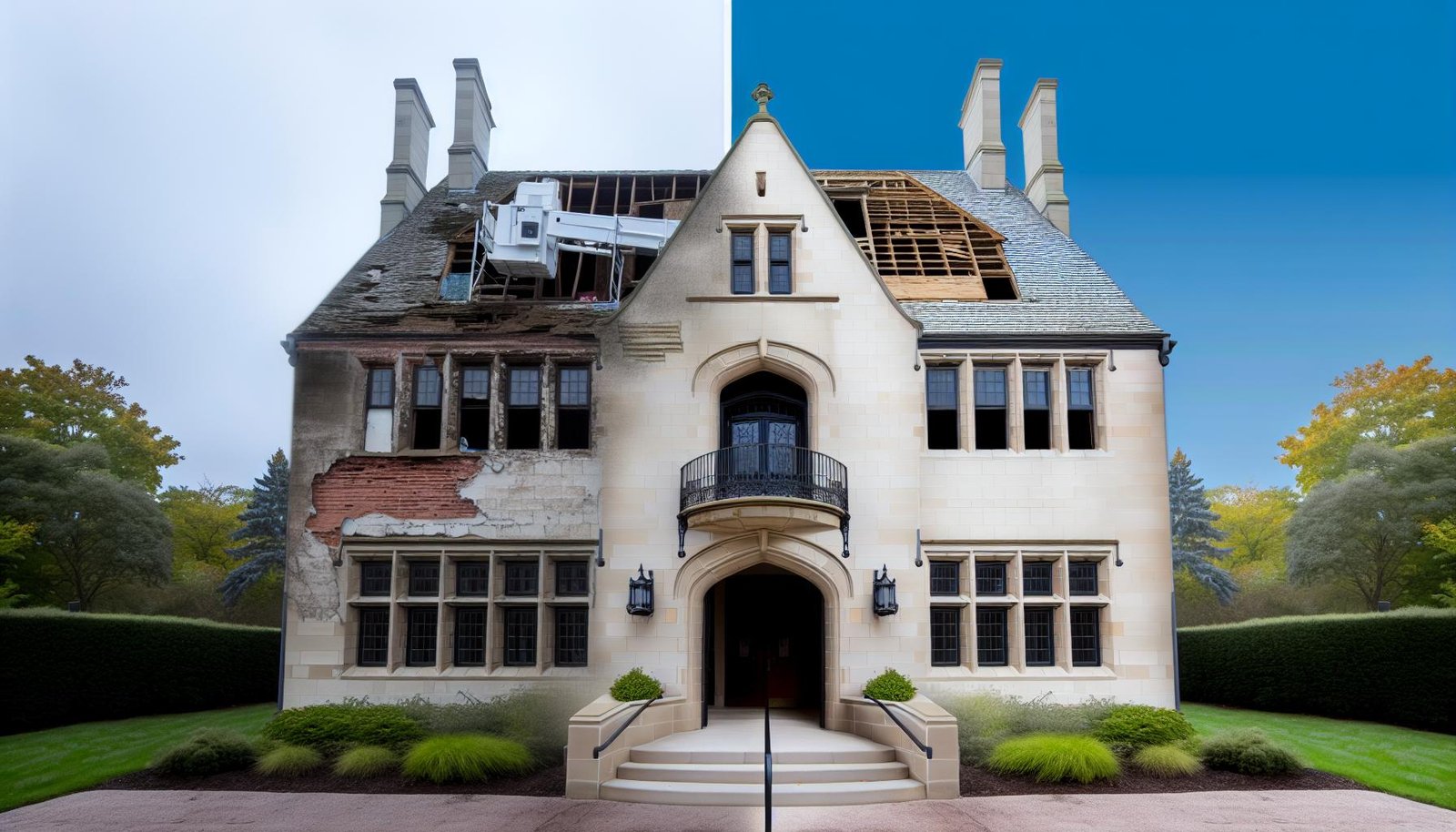
PK Development Group is proud to present the Stirrup House restoration as a hallmark of our commitment to historic stewardship in Miami. This case study illustrates how thoughtful design, technical rigor, and community collaboration turn conservation goals into lasting, productive places. For cultural institutions and media seeking an authoritative example of historic preservation projects Florida, the Stirrup House demonstrates how adaptive reuse, compliance with local and state guidelines, and innovative financing converge to protect architectural heritage and generate measurable social and economic benefits.
Why the Stirrup House Matters
Located within a recognized historic district Miami, the Stirrup House is more than a building: it is a repository of local memory, craft, and cultural identity. When PK Development Group took on the project in 2023, our objective was clear: respect the building’s character while making it viable for contemporary use. That dual objective is central to sustainable historic preservation Florida initiatives and aligns with evolving standards for restoration standards in 2025.
The Stirrup House project was designed to serve as a demonstration of best practices for historic preservation projects Miami, showing how a developer can harmonize regulatory requirements, community expectations, and architectural integrity. This story is relevant to cultural institutions seeking partners, and to media covering how preservation informs Miami’s urban identity.
PK Development Group’s Heritage-First Approach
PKDG differentiates itself through a heritage-first methodology that places historic fabric at the center of design, rather than treating preservation as an afterthought. Our approach emphasizes:
- Research-driven decision making: archival study, materials analysis, and oral histories to inform interventions.
- Conservation-led design: prioritizing repair and minimal intervention over replacement.
- Adaptive reuse strategies that respect original layouts and circulation while providing modern amenities.
- Transparent stakeholder engagement with preservation boards, cultural institutions, and neighborhood groups.
This methodology allowed us to position the Stirrup House as a replicable model for adaptive reuse Miami projects, combining authenticity with financial sustainability.
Project Timeline and Key Milestones (2023–2025)
Executing a complex conservation project requires precise sequencing. Key milestones during the Stirrup House restoration included:
- 2023: Preliminary documentation, historical research, and condition assessments.
- 2024: Design development, engagement with Miami-Dade preservation authorities, and application for incentives.
- 2025: Construction, specialized restoration work, and completion of core systems upgrades.
By following a phased schedule aligned with historic preservation guidelines Florida, PKDG limited risk and ensured compliance with restoration standards for Florida historic buildings.
Regulatory Pathways: Navigating Permits and Zoning
Successful historic restoration requires fluency in local codes and state guidelines. For developers and institutions asking how to start a historic preservation project in Miami Florida, understanding the regulatory environment is essential. Key considerations include:
- Historic review boards: Early submission for review with local historic preservation commissions to identify concerns and secure approvals.
- Permits required for historic preservation projects in Florida for developers: Building permits, specialized demo permits, certificates of appropriateness, and environmental clearance are commonly needed.
- Historic preservation zoning Florida: Knowing the zoning overlay and any special district requirements that affect allowable uses and dimensional standards.
For Stirrup House, PKDG prepared a comprehensive permitting package that included measured drawings, treatment plans, and photographic documentation. We coordinated with Miami Beach historic preservation zoning staff and Miami-Dade authorities to reconcile modern code requirements with conservation objectives.
Financing Historic Restoration: Incentives and Capital Strategies
Financing is often the most challenging aspect of historic preservation projects Florida. PKDG combined public incentives, tax-credit strategies, and private financing to create a viable pro forma. Developers frequently ask about Miami historic preservation tax incentives for developers and preservation tax incentives Florida. The Stirrup House leveraged several tools:
- Historic tax credits: Federal and state credits where applicable, structured to support rehabilitation costs.
- Local incentive programs: Municipal programs in Miami and Miami Beach that encourage preservation through grants or tax abatements.
- Historic preservation incentives Florida such as fee waivers or expedited review for public-benefit uses.
- Private capital and bridge financing that filled timing gaps between capital expenditures and credit realization.
Addressing questions around financing historic preservation projects in Florida for developers requires early engagement with tax advisors and municipal offices. PKDG’s financial model included conservative escalation assumptions and sensitivity analyses to ensure long-term viability.
Technical Conservation: Restoration Standards and Craft
Restoring a historic building in Florida requires special attention to materials, climate resilience, and authenticity. The Stirrup House project adhered to internationally recognized conservation principles and localized restoration standards for Florida historic buildings. Highlights of our technical approach:
- Materials analysis: Mortar, wood species, paint stratigraphy, and masonry were tested to guide compatible repair.
- Moisture management: Upgrades to drainage and waterproofing were designed to prevent recurring damage while avoiding impermeable barriers that harm historic fabric.
- Seismic and wind resilience: Structural reinforcement methods were selected to meet Miami-Dade codes without altering visual character.
- Energy and systems upgrades: Mechanical, electrical, and plumbing systems were integrated with minimal visual impact to support contemporary use and sustainability goals.
By following best practices for Miami historic preservation projects, PKDG ensured the Stirrup House would remain resilient in Miami’s climate through 2025 and beyond.
Adaptive Reuse: Balancing Heritage and Function
The Stirrup House demonstrates how adaptive reuse of historic buildings in Miami real estate development can sustain cultural value while creating new economic uses. Adaptive reuse strategies we employed included:
- Preserving primary elevations and key interior spaces while allowing reversible alterations in secondary areas.
- Introducing compatible new uses—cultural programming, small gallery space, and offices for heritage-focused non-profits—that complement the building’s scale and neighborhood context.
- Designing wayfinding and accessibility improvements that respect historic circulation patterns.
This nuanced approach to adaptive reuse Miami ensures the Stirrup House remains a living part of the community rather than a static artifact.
Engagement with Cultural Institutions and Community
Cultural institutions are vital partners in preserving heritage. PKDG engaged local museums, archival centers, and neighborhood groups to provide interpretive programming and to co-curate exhibitions that situate the Stirrup House within Miami’s broader cultural narrative. Collaboration delivered multiple benefits:
- Access to archival resources and expertise that informed accurate restoration.
- Public programming that increased awareness and foot traffic, supporting economic sustainability.
- Shared stewardship models for ongoing maintenance and conservation education.
These partnerships exemplify how preservation transcends architecture, aligning with the missions of cultural institutions and media coverage priorities.
Policy Navigation: Zoning, Incentives, and Legal Frameworks
Developers and institutions frequently need guidance on how to navigate zoning when preserving historic properties in Florida. The Stirrup House project required a targeted strategy that addressed:
- Historic overlays that prescribe design criteria and permitted uses.
- Conditional use permits for adaptive reuse that altered the building’s function.
- Variance processes when dimensional standards conflicted with preservation goals.
Specifically, PKDG engaged land planners and preservation attorneys early to craft applications that satisfied both preservation review and zoning authorities. In Miami Beach, where Miami Beach historic preservation zoning and incentives are particularly nuanced, this proactive coordination minimized delays and clarified the path to approvals.
Case Studies and Comparative Analysis
To illustrate scalable strategies, the Stirrup House restoration was framed within a comparative analysis of other case studies: historic preservation projects in Florida for developers. Key insights included:
- Successful projects typically secured a combination of tax credits and local incentives early in the planning phase.
- Adaptive reuse that created mixed cultural and commercial uses produced positive economic multipliers in neighborhood contexts.
- Projects that invested in interpretive programming generated higher public support and media visibility.
This comparative lens helps cultural institutions and journalists understand the wider landscape for historic restoration Florida and positions PKDG as a trusted partner with proven methodologies.
Measuring Economic Impact
Understanding the economic impact of historic preservation in Miami real estate development is crucial for stakeholders. For the Stirrup House, PKDG commissioned an economic impact summary that highlighted:
- Job creation during the restoration phase and sustained employment from new uses.
- Increased property values in the adjacent blocks due to improved streetscape and cultural activation.
- Enhanced tourism and visitation tied to curated exhibits and public programs.
These measurable outcomes reinforce the fact that preservation is an investment, not merely an expense. They also provide cultural institutions and media with quantifiable narratives about the value of heritage projects.
Practical Steps: From Concept to Completion
For developers and cultural partners who want to know how to start a historic preservation project in Miami Florida, PKDG recommends the following roadmap based on our Stirrup House experience:
- Conduct preliminary research: Document the building’s history, significance, and physical condition.
- Engage preservation professionals: Hire conservation architects, materials specialists, and archaeologists as needed.
- Initiate stakeholder outreach: Meet with municipal preservation staff, community groups, and potential cultural partners.
- Assess financing options: Evaluate Miami historic preservation tax incentives for developers, federal and state credits, and local grants.
- Prepare permitting strategy: Identify the permits required for historic preservation projects in Florida for developers and submit documentation early.
- Develop an adaptive reuse plan that aligns with historic preservation zoning Florida and market realities.
- Execute construction with skilled craftsmen and follow restoration standards for Florida historic buildings.
- Launch interpretive programming to reintroduce the building to the public and stakeholders.
Following these steps helps reduce risk and align expectations across public and private partners.
Common Challenges and How PKDG Overcomes Them
Historic preservation projects often face predictable challenges. PKDG’s Stirrup House experience revealed effective mitigation strategies for obstacles such as:
- Unforeseen conditions: Conduct thorough pre-construction investigations and budget contingencies for hidden repairs.
- Regulatory ambiguity: Maintain continuous dialogue with preservation officers and employ heritage consultants to interpret standards.
- Financing timing: Use short-term bridge financing and structure tax credit syndication early to avoid cashflow bottlenecks.
- Community expectations: Implement inclusive engagement practices that translate community values into design decisions.
These strategies reflect the operational expertise PKDG brings to complex historic preservation projects Miami stakeholders.
Best Practices for Developers and Cultural Institutions
To achieve exemplary outcomes, PKDG follows a set of best practices that can guide others undertaking restoration work in Miami:
- Start early with due diligence and be conservative in condition assessments.
- Prioritize reversible interventions so future generations can reinterpret the building.
- Leverage mixed funding sources to improve feasibility and distribute risk.
- Document every decision—clear records help with future maintenance and scholarly work.
- Design for resilience in a coastal environment, integrating climate adaptation with conservation.
These best practices align with nationally recognized guidance and local guidelines for historic preservation in Miami for real estate developers.
Communicating the Story: Media and Interpretation
Media and cultural partners play a central role in translating the technical work of preservation into public understanding. PKDG developed an interpretive plan for the Stirrup House that included exhibition text, docent training, and public lectures. Framing the project helped illustrate how historic restoration Florida can be both rigorous and accessible.
For journalists covering the Stirrup House, salient angles include the interplay between policy incentives and private investment, the technical challenges of conservation in a subtropical climate, and the social benefits of preserving community anchors.
Measuring Success Beyond Completion
Success in heritage projects is multi-dimensional. PKDG evaluates outcomes using a balanced framework that includes physical conservation metrics, economic indicators, and cultural impact measures. For the Stirrup House, indicators of success through 2025 include:
- Preservation of character-defining features and compliance with restoration benchmarks.
- Positive economic performance of the new uses and increased local visitation.
- Strong relationships with cultural partners and ongoing programming schedule.
These measurable outcomes underscore the long-term value of investing in historic preservation Florida initiatives.
Conclusion: A Model for Future Projects
The Stirrup House restoration is a practical roadmap for how developers, cultural institutions, and media can collaborate to preserve Miami’s architectural heritage. By integrating meticulous conservation practices, informed financing, and community engagement, PK Development Group demonstrates how historic preservation projects Florida can be both culturally meaningful and economically viable.
For cultural institutions seeking partners, and for journalists looking for robust case studies, the Stirrup House offers clear lessons on what works: early coordination, rigorous technical standards, strategic use of incentives like preservation tax incentives Florida, and adaptive reuse that respects historic character while ensuring long-term sustainability.
Explore our heritage restoration projects
How can developers and cultural stewards work together to make heritage preservation a central pillar of Miami’s urban future?