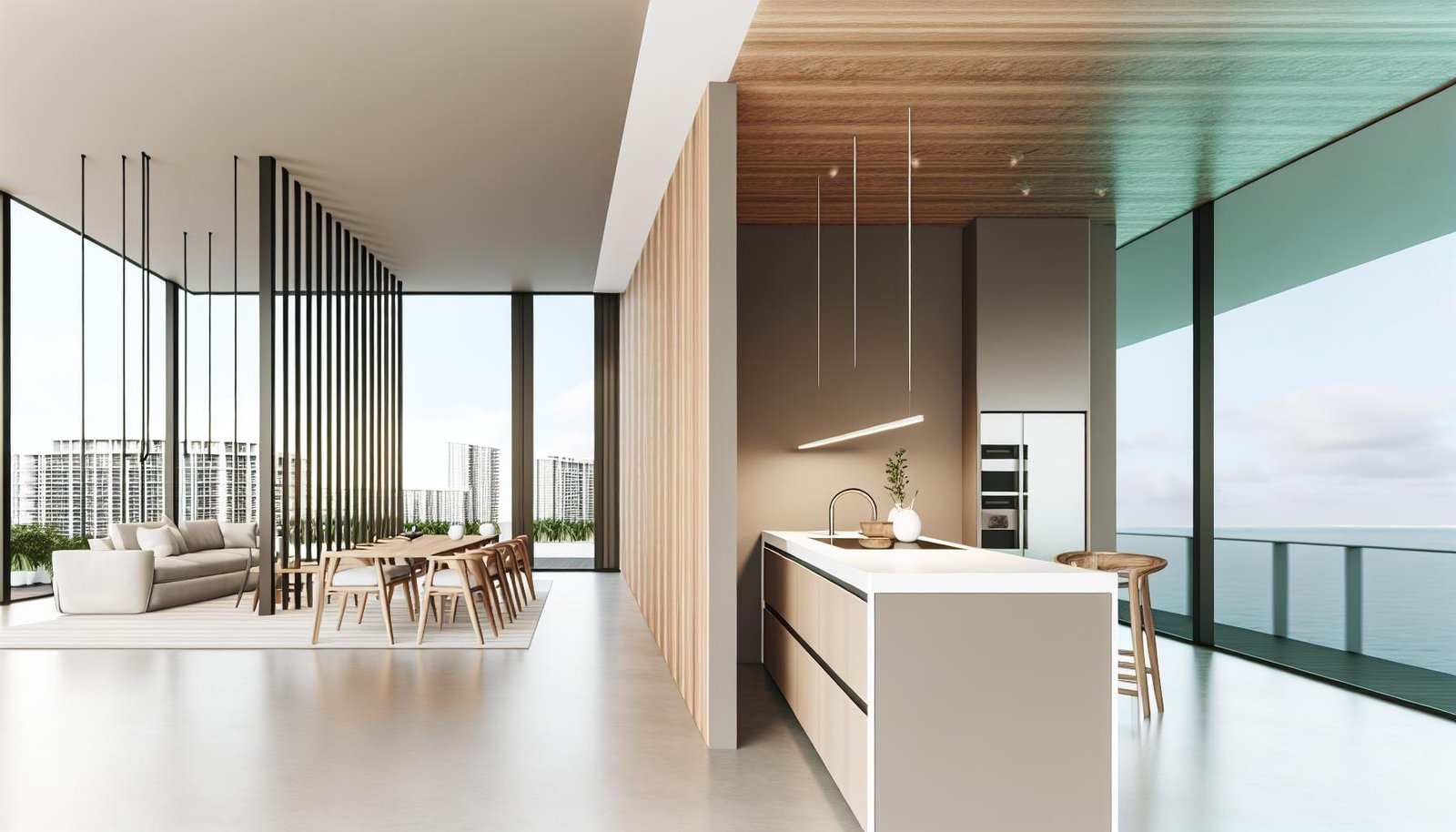
Miami’s skyline evolves every year, and with it comes an elevated standard for interior design Miami—especially for condominium developments that seek to attract discerning homebuyers, designers, and architects. From panoramic glass towers to boutique mid-rise residences, successful condo projects blend coastal sensibility with contemporary luxury. This article examines the defining interior design trends shaping Miami’s condominium market in 2025 and offers actionable insights for developers, design teams, and buyers.
Why interior design matters for Miami condos
Condominium interiors in Miami are no longer just finishes; they are part of the product offering. Thoughtful residential interior design Miami increases perceived value, accelerates sales velocity, and positions a project competitively in a dense market. More than aesthetics, successful condo interiors solve real lifestyle needs—maximizing light, ventilation, storage, and flexibility while reflecting Miami’s unique cultural and environmental context.
Key trends shaping modern Miami condominiums
Below are the dominant trends that interior design firms Miami and developers are embracing to create market-ready, future-proof condos.
1. Indoor-outdoor living with resilient materials
Miami buyers prioritize connection to the outdoors. Interiors that blur the boundary between inside and out—through floor-to-ceiling glazing, expansive terraces, and continuous flooring—offer a strong lifestyle appeal. Given Miami’s climate, materials must be both elegant and resilient: porcelain tile that mimics wood, UV-resistant fabrics, and low-maintenance natural stone are common choices.
For real estate teams, specifying materials that meet coastal durability standards while maintaining luxury aesthetics is integral to interior design for real estate development in Miami.
2. Miami modernism with warm, tactile layers
The current aesthetic leans toward a Miami modern palette—clean lines paired with warm, tactile elements. Think matte brass fixtures, hand-textured plaster, woven wall coverings, and tactile upholstery. This approach balances the city’s bright, modern architecture with interior comfort.
3. Luxury finishes that read as timeless rather than trendy
Buyers seeking long-term value favor timeless luxury: bookmatched marble foyers, custom millwork, integrated lighting, and engineered hardwood floors. Luxury interior design Miami projects prioritize quality and longevity, choosing finishes that age gracefully and provide a strong resale narrative.
4. Flexible, multi-functional spaces
With remote work entrenched, condos require flexible plans. Convertible dens, retractable partitions, and integrated work nooks are standard features. Residential interior design services for real estate projects Miami now commonly include modular cabinetry solutions and plug-and-play power/data zones to accommodate evolving uses.
5. Wellness-focused interiors
Health and wellbeing are central to design decisions. Natural ventilation strategies, non-toxic finishes, circadian lighting, acoustic treatments, and dedicated fitness or recovery spaces add tangible value. Wellness amenities are a selling point for both buyers and tenants in Miami’s competitive market.
6. Smart-home integration and invisible technology
Tech integration that doesn’t compromise aesthetics is vital. From centralized lighting and shading controls to energy management and voice-activated systems, buyers expect smart-home features. Interior design Miami now routinely coordinates with AV and MEP consultants to embed systems discreetly within architectural elements.
7. Local craft and art integration
Locally sourced art and craftsmanship personalize spaces and establish a sense of place. Collaborating with Miami-based artists and artisans reinforces authenticity and supports the local creative economy—an attractive proposition for buyers who want a genuine Miami experience.
8. Biophilic design and sustainable choices
Green design extends beyond potted palms. Biophilic strategies—living walls, indoor plant pockets, natural daylight optimization—improve wellbeing and energy performance. Developers increasingly request eco-friendly interior design for new construction in Miami to achieve sustainability certifications and appeal to environmentally conscious buyers.
How these trends translate into design decisions
Understanding trends is one thing; implementing them effectively within a development budget and timeline is another. Here are practical recommendations for integrating these trends into Miami condo projects.
Space planning and floor plate optimization
- Maximize natural light: Orient living spaces to capture views and daylight while minimizing heat gain with high-performance glazing.
- Flexible layouts: Design primary living zones to accommodate multiple configurations—work, rest, entertaining—using built-in storage and modular furniture footprints.
- Pronounced entry experience: In smaller condos, the foyer functions as a transition that sets the tone—high-quality finishes here elevate the entire unit.
Material and finish palettes
Material selection should balance coastal performance and luxury. Typical palettes include:
- Neutral base colors with saturated accent tones inspired by Miami’s sunsets and ocean hues.
- High-durability tiles for wet areas; engineered hardwood or resilient plank tiles for living zones.
- Corrosion-resistant hardware and marine-grade fixtures for coastal exposure.
Lighting and atmosphere
Layered lighting—ambient, task, and accent—creates adaptable environments. Integrate dimmable LEDs, automated shading, and circadian-friendly tunable white systems in primary suites and living spaces.
Acoustics and climate control
Sound transmission is a frequent buyer concern in high-rise living. Specify enhanced wall and floor assemblies, acoustic underlays, and sound-dampening finishes. Integrate efficient HVAC systems with zoning to improve comfort and energy performance.
Working with interior design firms in Miami
Selecting the right partner makes or breaks a project. Developers commonly engage interior design firms for Miami real estate projects that have track records in multi-unit developments and understand local permitting, supply chains, and the expectations of luxury buyers.
What to look for in a firm
- Project experience: Look for portfolios that include luxury residential developments, mixed-use projects, and hospitality work.
- Turnkey capability: Firms that coordinate FF&E, procurement, and installation reduce complexity and speed delivery.
- Local network: Established relationships with Miami suppliers, artisans, and contractors streamline procurement and improve quality control.
- Sustainability expertise: If pursuing certifications or green building targets, ensure the firm has experience in eco-friendly material selection and documentation.
Roles and responsibilities
Clarify scope early: schematic design, design development, construction documents, FF&E procurement, and installation oversight. For commercial interior design for Miami mixed-use developments, the scope may extend to amenity spaces, lobbies, retail tenancies, and exterior terraces.
Services developers commonly commission
Leading-edge developers in Miami request integrated services to deliver a cohesive product. Common commissions include:
- Concept and branding of interiors: A unifying narrative that informs finishes, art, and amenity programming.
- Turnkey FF&E packages: Scalable options from developer-provided turnkey suites to buyer-selected upgrade packages.
- Model suite and marketing support: Show-ready units staged to attract pre-sales.
- Technical coordination: Systems integration, lighting controls, and MEP interfacing to ensure installation reliability.
Balancing cost, quality, and speed
Cost management is critical. Strategies to balance budget and quality include:
- Standardize core elements: Use a limited palette across units for cost efficiency and streamlined procurement.
- Offer upgrade tiers: Provide base, premium, and bespoke packages to capture a broader buyer base.
- Early procurement: Lock critical long-lead items early—appliances, custom doors, and specialty stone—to avoid schedule delays.
Case study: implementing interior design trends in a Miami condo project (illustrative)
Imagine a 200-unit waterfront condominium in Miami Beach delivered in 2025. The development team prioritized interior design Miami Beach that reflected the coastal setting while delivering resilient, high-performance interiors:
- Open living plans with floor-to-ceiling windows, continuous porcelain plank flooring extending to terraces, and engineered glass railings to preserve sightlines.
- Neutral base palette with azure and coral accents in common areas to evoke the ocean without overwhelming private interiors.
- Smart-home platform integrated across all units with modular cabinetry and concealed wiring for a clean finish.
- Biophilic elements in the lobby—a living wall and an indoor water feature—to support wellness and reduce perceived stress for residents.
Such an approach increased buyer interest, allowed for a streamlined FF&E procurement strategy, and positioned the development competitively in the 2025 Miami condo market.
Addressing challenges unique to Miami
Designing in Miami requires attention to several local realities:
- Coastal exposure: Salt air and intense sun require corrosion-resistant finishes and UV-stable materials.
- Hurricane resilience: Protective glazing, secure balcony connections, and hurricane-rated doors are part of responsible interior planning near the coast.
- Local codes and permitting: Coordination with Florida building codes and Miami-Dade testing requirements is mandatory for both safety and insurance compliance in 2025.
Mixed-use considerations: integrating commercial interior design
Many Miami developments combine residential, retail, and office spaces. Commercial interior design Miami must harmonize with residential standards while supporting commercial tenants’ functional needs. Successful mixed-use interiors create a clear hierarchy of spaces: public, semi-public, and private—each with tailored finishes and service strategies.
Marketing and buyer experience through interiors
Interiors play a central role in marketing. Model units, amenity spaces, and concierge areas are primary touchpoints for buyers. Luxury interior design for Miami condo developers should consider staged experiences that convey lifestyle benefits—entertaining, wellness, privacy, and community. When buyers can clearly imagine a daily life in a space, conversion rates rise.
Spanish-language services and local engagement
Given Miami’s bilingual population, offering resources in Spanish improves accessibility. Services such as diseño de interiores Miami and diseño de interiores Miami Beach are often requested by Spanish-speaking buyers and investors. Firms offering servicios de diseño de interiores Miami and servicios de diseño de interiores para desarrollos en Miami can differentiate themselves by providing bilingual documentation and client-facing materials.
Selecting the right suppliers and contractors
Reliable local suppliers shorten timelines and offer cost advantages. Partner with vendors who understand Miami’s logistical realities—warehouse storage for pre-staged FF&E, experienced installers for high-rise conditions, and marine-grade hardware suppliers. Firms listed among firmas de diseño de interiores Miami often provide vetted supplier networks that reduce procurement risk.
Budget templates and ROI for developers
Interior budgets vary by project class. For luxury developments, interior allowances typically represent a meaningful portion of the total construction budget. Return on investment comes from faster sales, premium pricing, and stronger brand reputation. Detailed cost models that contrast base build scope versus upgrade packages help developers predict revenue and absorption timelines.
Trends for 2025 and beyond: what developers should watch
- Circular design principles: Increased focus on reuse, modular components, and materials with lower embodied carbon.
- Advanced materials: New composite surfaces that mimic stone and wood but offer better durability and lighter weight.
- Enhanced wellness standards: Greater demand for air filtration, antimicrobial finishes, and dedicated recovery spaces.
- Localized aesthetics: A stronger emphasis on Miami-specific cultural narratives—celebrating local architecture, artists, and history.
How PK Development Group approaches interior design
At PK Development Group, we integrate architecture, interior strategy, and market intelligence to deliver condominium interiors that resonate with Miami’s lifestyle. We collaborate with top interior design firms for Miami real estate projects, ensuring that unit planning, amenity programming, and FF&E align with market expectations and brand identity. Our approach includes early-stage concept development, detailed construction documentation, and turnkey installation oversight to optimize schedule and quality.
Checklist for developers and design teams
Before finalizing interior plans for a condominium development in Miami, use this practical checklist:
- Confirm coastal material specifications for durability and corrosion resistance.
- Incorporate flexible living solutions and integrated technology platforms.
- Define clear FF&E tiers and communicate buyer upgrade options early.
- Engage local suppliers and verify lead times for long-lead items.
- Evaluate sustainability targets and document eco-friendly material choices for certifications.
- Coordinate acoustics and HVAC zoning to meet buyer expectations for comfort.
- Provide bilingual materials if targeting Spanish-speaking buyers—diseño de interiores para desarrollos inmobiliarios en Miami and servicios de diseño de interiores para desarrollos en Miami.
Choosing the right interior design partner
Whether you need interior design Miami Beach expertise for a boutique tower or full-service commercial interior design for Miami mixed-use developments, prioritize firms that demonstrate:
- Proven multi-unit and mixed-use experience.
- Capacity for FF&E procurement and logistics management.
- Strong documentation skills to support permitting and certifications.
- Local relationships with decoración de interiores Miami suppliers and artisans.
Final considerations for buyers, designers, and architects
For homebuyers, a well-designed condo unit is a marriage of form and function: you should look for durable materials, smart storage solutions, and integrated technology that enhance daily life. For designers and architects, Miami offers a unique opportunity to craft spaces that reflect a vibrant coastal culture while addressing environmental challenges. Collaborative, research-driven design—rooted in market insight and technical rigor—yields the strongest outcomes.
Summary
Miami’s condominium interiors in 2025 must balance coastal resilience, lifestyle flexibility, and refined aesthetics. Developers who invest in thoughtful interior design Miami strategies—partnering with experienced firmas de diseño de interiores Miami and leveraging local networks—will build residences that meet buyer expectations and stand the test of time. From luxury interior design Miami finishes to eco-friendly interior design for new construction in Miami, the trends outlined here provide a roadmap for creating competitive, compelling condo interiors.
See our latest condo designs.
How would you prioritize the balance between timeless luxury and adaptable, sustainable features in your next Miami condominium project?