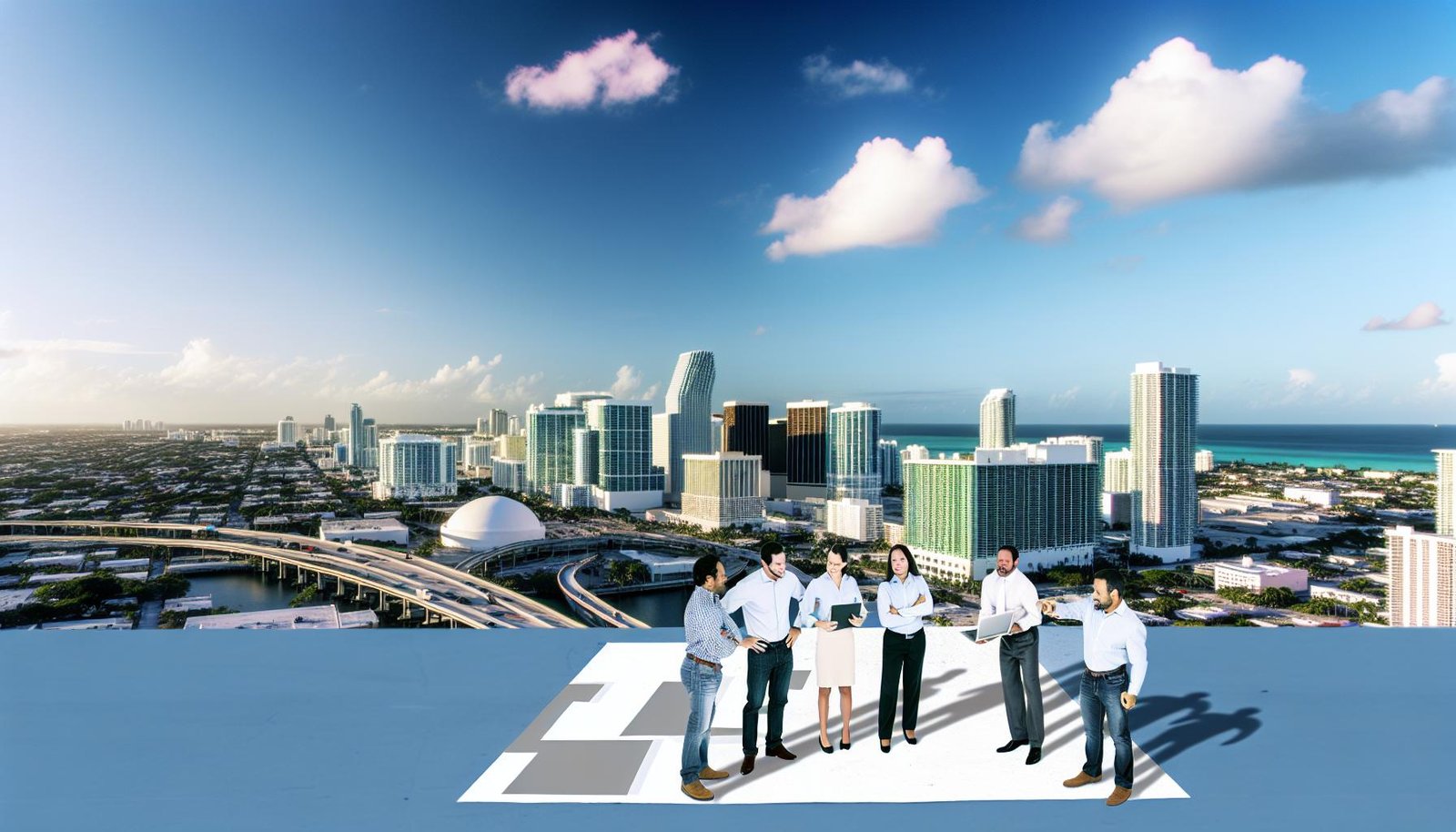
As Miami continues to grow as a global gateway and a magnet for capital, talent, and creativity, the challenge for policymakers, investors, and planners is clear: how to pursue urban development Miami that is resilient, equitable, and sustainable. This article examines the strategic, regulatory, financial, and design considerations needed to build cities with purpose in 2025, with a focus on actionable guidance for decision-makers interested in Miami real estate development and South Florida real estate development.
Miami’s Urban Context in 2025
Miami-Dade County development is unfolding at a rapid pace as demographic growth, international investment, and climate pressures converge. The region’s appeal—from waterfront property to dense mixed-use corridors—has driven a surge in Miami mixed-use development, Miami commercial real estate development, and Residential development in Miami. At the same time, Miami urban planning professionals face the urgent need to integrate climate adaptation, transit access, and affordable housing into the development agenda.
Urban development Miami is no longer just a question of building more; it is about building smarter. Policymakers and investors must align incentives, regulations, and investments to support projects that deliver public value, protect natural systems, and generate long-term returns.
Principles of Sustainable City Building
Sustainable city building in Miami prioritizes three interlocking goals: resilience, inclusivity, and economic vitality. These principles guide decisions from site selection to financing and from design to operations.
- Resilience: Projects must withstand sea level rise, extreme storms, and changing insurance markets through elevation strategies, flood-proof design, and infrastructure upgrades.
- Inclusivity: Mixed-income approaches and targeted Miami affordable housing development programs ensure that growth benefits residents across income levels.
- Economic vitality: Transit-oriented development Miami and mixed-use schemes increase land efficiency, reduce commute times, and expand local economic activity.
Embedding these principles into urban development Miami helps future-proof investments and strengthens the social license to build.
Regulatory Landscape and Zoning Considerations
One of the first practical hurdles for any developer or planner is understanding the zoning requirements and development codes that shape what can be built. The regulatory environment in Miami is evolving to address density, resilience, and land use.
Key regulatory topics include:
- Zoning requirements for developers in Miami: Developers must navigate local zoning districts, overlay zones, and special use permits that dictate permitted uses, building heights, setbacks, and parking requirements. Early engagement with municipal planning departments and community stakeholders accelerates approvals and identifies opportunities for variances or bonuses.
- Miami density and zoning codes for developers: Density incentives or bonuses can unlock higher floor area ratios in exchange for public benefits like affordable housing, green space, or infrastructure improvements. Understanding these incentives is central to financial modeling.
- Miami beachfront development regulations: Waterfront and beachfront parcels are subject to additional rules related to coastal setbacks, dune protection, and public access requirements. Compliance with state and county coastal regulations must be built into project timelines and budgets.
For those new to the market, consulting specialized land-use counsel and experienced local planners can reduce regulatory risk and identify creative compliance strategies.
Incentives, Funding, and Public Programs
Strategic use of incentives can tip a project from marginal to viable. Policymakers looking to catalyze sustainable outcomes can deploy a mix of financial and regulatory tools, while investors should be informed about available programs.
- incentives for real estate development in Miami: Local governments and economic development agencies may offer tax increment financing (TIF), expedited permitting, fee waivers, or infrastructure cost-sharing to encourage targeted development goals such as downtown revitalization or transit corridor investment.
- Miami redevelopment projects and incentives: Designated redevelopment areas often come with tailored incentive packages to stimulate investment in blighted or underutilized neighborhoods. These incentives are frequently tied to measurable outcomes like job creation, affordable housing units, or public realm improvements.
- Miami affordable housing development programs: Federal, state, county, and local programs—ranging from Low Income Housing Tax Credits (LIHTC) to local linkage fees and inclusionary zoning programs—play a critical role in preserving access to housing as Miami’s market intensifies.
Closely coordinating with municipal staff and affordable housing agencies helps to assemble the financing stack necessary for catalyst projects that include public benefits.
Market Trends and Opportunity Areas
Understanding market dynamics is critical for investors and developers evaluating urban development Miami. Below are several trends shaping opportunity in 2025.
- Miami real estate development trends: The market continues to diversify beyond luxury waterfront towers into neighborhood-scale mixed-use, adaptive reuse, and transit-focused projects. Demand for flexible commercial space and higher-quality residential developments persists as remote work reshapes spatial needs.
- Best neighborhoods for development in Miami: Neighborhood-level opportunity shifts with transit expansions, demographic changes, and public investments. Infill corridors near transit nodes, underutilized industrial pockets, and waterfront-edge properties often present the most strategic opportunities for responsible growth.
- Miami waterfront development and Miami beachfront development regulations: Waterfront development remains attractive but requires sophisticated risk assessment due to flooding and regulatory constraints. Developers who integrate resilient design can achieve premium valuations while protecting long-term asset value.
- Miami mixed-use development and Miami commercial real estate development: Mixed-use projects that combine housing, retail, office, and public space optimize land value and support 24/7 neighborhoods. Commercial real estate development now prioritizes amenity-rich, human-centered design to attract tenants.
- Residential development in Miami: A growing need exists for mid-market and workforce housing that serves long-term residents and local employees. Projects that blend market-rate units with Miami affordable housing development programs can achieve broader community support and financial feasibility.
How to Start Real Estate Development in Miami: A Practical Roadmap
For those asking how to start real estate development in Miami, the path requires a methodical approach that aligns market intelligence, regulatory compliance, financing, and community engagement.
- Market and site analysis: Assess demand drivers, competitive supply, neighborhood trajectories, and infrastructure context. Use data on rents, sales, vacancy, and demographic shifts to shape product type and pricing strategy.
- Regulatory due diligence: Confirm zoning requirements for developers in Miami, entitlements, and any overlay restrictions. Investigate Miami density and zoning codes for developers to estimate achievable development potential.
- Financial modeling: Build conservative pro forma scenarios that incorporate potential permitting timelines, infrastructure costs, and climate adaptation expenses. Consider incentives for real estate development in Miami to enhance returns.
- Community and stakeholder engagement: Early outreach to neighborhoods, elected officials, and planning staff reduces opposition and uncovers partnership opportunities.
- Design and resilience planning: Integrate stormwater management, resilient materials, and adaptable uses to reduce long-term operating risk.
- Capital stack assembly: Combine equity, debt, public incentives, and potential tax credits (e.g., LIHTC) for projects with affordable components. Investors should evaluate exit strategies and hold periods carefully in the context of market volatility.
- Project execution: Use experienced local contractors, strong project management, and phased delivery when possible to manage cash flow and market absorption risk.
By following a disciplined development process, developers can convert opportunity into completed projects that align with Miami’s broader urban objectives.
Transit-Oriented Development and Mobility-First Strategies
Transit-oriented development Miami is a critical lever for reducing vehicle dependence and unlocking value along transit corridors. Projects focused around transit stations benefit from higher density allowances, increased foot traffic for ground-floor retail, and improved access to labor pools.
Practical measures to maximize TOD value include prioritizing ground-floor active uses, limiting parking through shared or managed systems, and integrating complete-streets principles that improve walkability and bike access. Pairing transit investments with Miami redevelopment projects and incentives enhances public benefits and strengthens the case for denser, mixed-use schemes.
Design Strategies for Climate Adaptation and Sustainability
Resilient design is no longer optional in Miami. Developers should consider a suite of strategies that integrate mitigation and adaptation:
- Elevated podiums and critical infrastructure to reduce flood risk.
- Permeable pavements, bioswales, and green infrastructure to manage stormwater and enhance urban heat resilience.
- Energy-efficient façades, passive cooling, and on-site renewables to reduce operating costs and carbon footprint.
- Flexible ground-floor design that can accommodate shifting retail demand and social services.
Incorporating these measures can also improve access to green financing and insurance products increasingly available to developments that meet high resilience standards.
Financing & Value Creation
Urban development Miami projects require creative financing strategies to bridge the gap between initial costs and long-term value. Some practical considerations:
- Leverage public incentives for infrastructure, affordable housing, or brownfield remediation.
- Explore blended finance models that combine public grants, low-cost public loans, and private equity.
- Consider phased development to align construction exposure with market absorption and to unlock value progressively.
- Assess opportunities in Miami commercial real estate development for flexible workspace, last-mile logistics, and experiential retail, which can diversify income streams.
Investors should evaluate not only headline cap rates but also long-term value drivers such as resilience, transit access, and community integration.
Public-Private Partnerships and Policy Levers
Well-structured public-private partnerships (PPPs) can accelerate projects that deliver public value. For policymakers considering PPPs to achieve Miami urban planning objectives, recommended levers include:
- Use of land value capture to finance infrastructure and public realm improvements.
- Density bonuses tied to clear public benefits like affordable housing or public open space.
- Streamlined permitting processes and one-stop permitting centers to reduce soft costs and timelines.
- Targeted Miami redevelopment projects and incentives that focus on corridors with high transit potential or chronic disinvestment.
Collaborative frameworks that align developer incentives with municipal goals can unlock transformational projects while sharing risk proportionately.
Risk Management: Climate, Insurance, and Long-Term Viability
Risk management is central to sustainable urban development Miami. Developers and investors must account for evolving risk profiles driven by climate change and regulatory changes.
- Flood and storm risk: Evaluate property-level and neighborhood-level flood risk and incorporate mitigation measures to reduce vulnerability.
- Insurance considerations: Insurance markets are shifting in South Florida real estate development; projects with robust resilience measures may benefit from more favorable coverage terms.
- Regulatory shifts: Anticipate changes to Miami beachfront development regulations and coastal resilience requirements that could affect project costs and timelines.
Early, integrated risk assessment minimizes surprises and can preserve asset value over multiple market cycles.
Case Studies and Strategic Opportunities
Successful urban development Miami projects often combine several of the elements discussed above. While project specifics vary, common success factors include strong site selection, early community engagement, resilient design, and a well-constructed capital stack.
Strategic opportunity areas include transit corridors primed for transit-oriented development Miami, underutilized industrial zones near waterfronts, and infill redevelopment parcels where Miami-Dade County development agencies are offering incentives to catalyze change. Projects that balance commercial viability with public benefits—such as community-serving retail and affordable housing—tend to secure broader support and more stable long-term performance.
Policy Recommendations for Decision-Makers
Policymakers play a pivotal role in shaping the built environment. Recommended actions to foster purposeful urban development Miami include:
- Clarify and modernize zoning to enable mixed-use, transit-supportive density while protecting sensitive coastal areas through robust Miami beachfront development regulations.
- Expand Miami affordable housing development programs with streamlined application processes and predictable incentives to attract private capital.
- Invest in multimodal transit and pedestrian infrastructure to make transit-oriented development Miami feasible and attractive.
- Offer targeted incentives for projects that demonstrate measurable resilience outcomes, energy efficiency, and community benefits.
- Maintain transparent and collaborative permitting processes to reduce uncertainty for developers and lenders.
These policy measures align public resources with private investment and help ensure that growth generates broad-based benefits.
Practical Checklist for Developers and Investors
To operationalize urban development Miami priorities, stakeholders can use the following checklist:
- Conduct a comprehensive market analysis focused on Miami real estate development trends and local demand metrics.
- Verify zoning requirements for developers in Miami and consult on Miami density and zoning codes for developers early in the planning process.
- Identify available incentives for real estate development in Miami and Miami redevelopment projects and incentives that may apply.
- Incorporate Miami affordable housing development programs into the finance plan when applicable.
- Design for resilience to comply with Miami beachfront development regulations and to mitigate long-term operational risks.
- Plan for transit-oriented development Miami when near transit assets; reduce parking and emphasize active ground-floor uses.
- Engage the community and local agencies early to build alignment and identify potential public-private partnership opportunities.
Conclusion: Building Purposeful Places in Miami
Urban development Miami in 2025 requires a balanced, strategic approach that aligns private returns with public outcomes. By understanding Miami real estate development trends, applying resilient design principles, navigating zoning requirements for developers in Miami, and leveraging incentives for real estate development in Miami, stakeholders can deliver projects that strengthen neighborhoods, support economic growth, and protect the region’s natural assets.
PK Development Group and like-minded private partners, in coordination with municipal leaders and planning agencies, can catalyze a new generation of projects that reflect Miami’s unique opportunities and challenges. Whether focusing on Miami mixed-use development, Miami commercial real estate development, Miami waterfront development, or Residential development in Miami, the emphasis should remain on long-term value, community benefit, and environmental stewardship.
Let’s shape Miami’s next community together
How will your organization contribute to resilient, inclusive urban development in Miami as we move forward?